

In 2021, Syracuse Orange players and their peers around the country could start earning endorsement income through third-party name, image and likeness ("NIL") deals. That historic event blurred the line between professional athletes and amateur athletes.
Last summer, the multi-billion-dollar House antitrust settlement was approved, paving the way for schools, including SU, to begin paying their players directly in the form of rev-share, another monumental moment in the ever-shifting college sports landscape. By extension, the line between professional and amateur was blurred even further amid rev-share being allowed at the onset of the 2025-26 sports season.
Today, given the financial considerations for collegiate athletes, the transfer portal's explosion and various other factors, it's a complete mess out there related to college players' eligibility, especially those athletes in the 2022 high school class who are attempting to gain a fifth season of eligibility.
The 2026 college football season begins later this week (for Syracuse football, its campaign commences on Saturday, Sept. 5). Other fall sports teams on the Hill and nationwide have already kicked off their 2026 seasons.
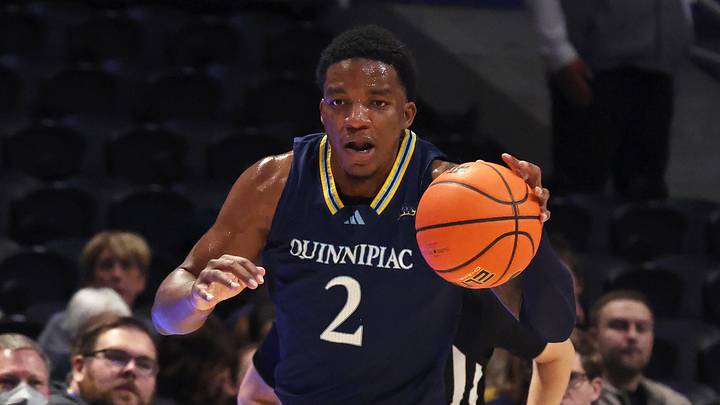
Yet here we are, seemingly every day, reading about lawsuits, talking about lawsuits and for media members like me, reporting on lawsuits. For Orange fans, the fight over a fifth season of college eligibility centers on Syracuse basketball forward Amarri Monroe, a transfer from Quinnipiac, and SU wide receiver Justus Ross-Simmons.
But on a national scale, the eligibility matter is a much bigger issue altogether, with complex layers. Beyond the legal wrestling over the NCAA's 5-for-5 eligibility model that was approved in late June, professional players in the NBA, the NBA's G League and overseas clubs want to suit up in college; the same holds true of NFL players.
Plaintiffs say the NCAA does not oppose expedition. If the 10th Circuit grants the request and hears argument Sept. 14–17, a merits ruling could realistically come in late September or October, though the court would not be under a deadline to rule by then. https://t.co/kVkgf5NKkH
— Austin Massey (@austinmasseySBI) August 25, 2026
So my question is, where does the line in the sand get drawn? Candidly, I have no definitive answer to this question. I have absolutely, positively no idea what should be allowed and what shouldn't be allowed.
People, myself included, are often quick to cast blame on the NCAA, and I get why. It's an incompetent organization, I've often contended, but the current eligibility chaos isn't just the NCAA's fault. There are many stakeholders involved here.
Some folks don't hesitate to blame attorneys for the current state of everything in college sports. I think that's shortsighted, too. Are some attorneys benefiting from the eligibility fiasco taking place across the country? Absolutely. But this goes way beyond attorneys, my friends.
For Syracuse and its peers, they are navigating an eligibility landscape that is a complete disaster these days.
How did we get to where we are today? I'm oversimplifying here, but when collegiate athletes could start making income off their name, image and likeness, and then more recently (and perhaps more importantly), as college players started to get paid directly by their schools, that was a tipping point.
The general argument now is that if college athletes are earning income, how is that any different from professional players who are earning income, so long as the latter fall within the age window to compete in college, haven't exhausted all their collegiate eligibility and their income doesn't exceed the NCAA's threshold for what is known as "actual and necessary expenses"?
That's why European basketball pros want to play in college. The same holds true for NBA and G League players, and now, apparently guys in the NFL, to some extent, are also trying to get into the collegiate game, where lucrative dollars exist at big-time programs in the form of rev-share and third-party NIL agreements.
To reiterate, I'm dumbing down the complexity of the overall eligibility issues for the purposes of this column. There are other criteria to be considered when pros attempt to head to college. But what's okay, and what's not okay?
If one signs a professional contract of any kind, does that mean one can't come back to college? What about a player who signs a pro contract but never plays in an actual game (or maybe just a preseason game)? Are overseas pros in a different category than NBA or NFL guys?
Again, I have no idea whatsoever. For Monroe and Ross-Simmons, they have been relying on a class-wide injunction that was issued by a federal judge in Colorado and provided 2022 athletes with a fifth season of eligibility, provided they want one and with certain parameters.
Last week, though, that preliminary injunction was stayed (i.e., temporarily paused) while the appeals process now plays out. Legal experts tell Inside the Loud House that the appeal could last a few weeks or a couple of months, so for college football players such as Ross-Simmons who want to compete in 2026, they will likely need to file a lawsuit of their own in a state court or attach their names to an existing injunction at the state level.
Without question, the NCAA could have avoided some of this stuff if it had just granted 2022 athletes a fifth season of eligibility when the 5-for-5 model was approved earlier this summer. At the same time, as some legal experts have told Inside the Loud House, perhaps the NCAA didn't grant a class-wide fifth season of eligibility to 2022 athletes who have already played four years in college because that could - and likely would - result in other players being booted off their respective teams' rosters for the upcoming 2026-27 sports seasons.
Especially concerning would be if incoming freshmen, who had committed to their college programs a while back while still in high school, saw their roster spots eliminated to pave the way for fifth-year players.
Attorneys and others have argued that the NCAA, when it passed its 5-for-5 model, was arbitrary in not letting 2022 athletes have a fifth season of eligibility. Perhaps that's true. Perhaps it isn't.
On Monday, a judge in Louisiana granted former Big East Conference player of the year RJ Luis Jr. a temporary injunction to play for LSU this coming season. Luis is not a fifth-year player, but he has signed multiple NBA-related contracts.
He has never appeared in a regular-season NBA game, as his attorneys stressed, while the NCAA says that Luis' situation is different from those who might have played for pro clubs overseas because Luis chose to leave the college level for the NBA.
Sources: The Big Ten is set to pass a rule today that doesn’t allow players to return from the NFL and play for a Big Ten school. Anyone who has declared for the NFL Draft and did not withdraw, appeared on an NFL roster or signed a contract with a pro league cannot be on a Big…
— Pete Thamel (@PeteThamel) August 25, 2026
This brings us to the NFL, where recent lawsuits have enabled players waived from training camp rosters to use a fifth season of eligibility in the upcoming college football campaign. ESPN's Pete Thamel, an SU alum, said via his X page on Tuesday morning that the Big Ten Conference is planning to pass a rule that "doesn’t allow players to return from the NFL and play for a Big Ten school. Anyone who has declared for the NFL Draft and did not withdraw, appeared on an NFL roster or signed a contract with a pro league cannot be on a Big Ten roster."
The ACC is expected to also consider a pro-player ban soon, source tells @YahooSports. https://t.co/PKtJtZPzBo
— Ross Dellenger (@RossDellenger) August 25, 2026
Others, including Ross Dellenger of Yahoo Sports, are also reporting on Tuesday that other leagues, such as the Atlantic Coast Conference and the Southeastern Conference, are weighing similar measures.
After a Monday evening videoconference of the Presidents and Chancellors of the Southeastern Conference, the Conference is issuing the following statement: pic.twitter.com/kwWxGz5CQ3
— Southeastern Conference (@SEC) August 24, 2026
Given the litigious society that we live in, and what's transpired of late in college sports, should power conferences pass such pro-player bans, I'm sure that will result in more lawsuits being filed. Attorneys sure are staying busy.
On top of everything I've already mentioned, federal lawmakers are expected to revisit the Protect College Sports Act of 2026 next month, and there is also the ongoing debate about whether collegiate athletes should be designated as employees by their schools.
Fun times in college sports, eh?
 Add us as a preferred source on Google